Meet the Participants 2022

goldstein

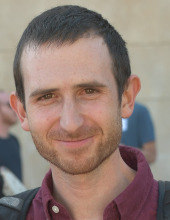
Binyamin Goldstein/ Yeshiva University


Binyamin Y. Goldstein is a doctoral candidate at Yeshiva University. His dissertation will focus on Jewish-Christian literary interaction in the early Abbasid period. His hobbies include everything Syriac-related, cheesemaking, and metalsmithing.


2011.jpg

Education and Religion (Hebrew)

Education and Religion
2004-2007
Education and Religion: Authority and Autonomy

Editors: Immanuel Etkes, Michael Heyd, Tamar Elor, Baruch Schwarz. Jerusalem: Magnes Press, 2011. (Hebrew)

r

Itay Abadi

Department of Archaeology

Read More

Subject: The Transition from The Upper Palaeolithic To the Epipalaeolithic In the Southern Levant And the Development of The Microlithic Technology.

Supervisor: Prof. Nigel Goring-Morris

Abstract: The doctoral dissertation focuses on one of the important developments in the of ancient hunting methods in the southern Levant. This change took place during the transition between the transition from the Upper Paleolithic to the Epipaleolithic periods (some 25,000 years ago), due to the development of microlithic tools (small stone tools, carefully designed in standard shapes, used to form composite projectile tools).
The study examines stone tool assemblages from several sites in the southern Levant from the end of the Upper Paleolithic and the beginning of the Epipaleolithic. By combine three different methods to analyze stone tool production (attribute analysis, experimental knapping and core refitting) the study aims to trace the source of this change and its evolution in terms of chronology, technology and style. 

Bio: PhD student at the Institute of Archaeology. Studied for BA and MA at Hebrew University. The MA thesis examining the transition from the Middle to the Upper Palaeolithic in the Levant, and was completed under the guidance of Prof. Anna Belfer-Cohen. The PhD thesis, written under the supervision of Prof. Nigel Goring-Morris, deals with lithic technology changes that seen with the appearance of the Epipalaeolithic in the Levant.

Publications:

  • Grosman, L., Munro, N.D., Abadi, I., Boaretto, E., Shaham, D., Belfer-Cohen, A., Bar-Yosef, O. 2016. Nahal Ein Gev II, a Late Natufian Community at the Sea of Galilee. PLoS ONE 11(1): e0146647. doi:10.1371/journal.pone.0146647.
  • Goder-Goldberger, M., Ginat, H., Ragolski, G., Seri, G., Abadi, I. 2017. Middle Palaeolithic Find Spots with Nubian Cores from the Southern Negev and the Arava, Israel. Journal of Lithic Studies 4(1). doi:10.2218/jls.v4i1.1688.
  • Grosman, L., Shaham, D., Valletta, F., Abadi, I., Goldgeier, H., Klein, N., Dubreuil, L., Munro, N.D. 2017. A Human Face Carved on a Pebble from the Late Natufian Site of Nahal Ein Gev II. Antiquity 91(358). doi:10.15184/aqy.2017.122.
  • Abadi, I., Grosman, L. 2019. Sickle Blade Technology in the Late Natufian of the Southern Levant. In Asrtuc L, McCartney C, Briois F, Kassianidou V (Eds.), Near Eastern Lithic Technologies on the Move: Interactions and Contexts in the Neolithic Traditions, 8th International Conference on PPN Chipped and Ground Stone Industries of the Near East, Nicosia, November 23rd–27th 2016. Pp. 295-304. Studies in Mediterranean Archaeology Volume 150. Astrom Editions, Nicosia.
  • Friesem, D.E., Abadi, I., Shaham, D., Grosman, L. 2019. Lime Plaster Cover of the Dead 12,000 Years Ago – New Evidence for the Origins of Lime Plaster Technology. Evolutionary Human Sciences 1: e9. doi: 10.1017/ehs.2019.9.
  • Abadi, I., Bar-Yosef, O., Belfer-Cohen, A. 2020. Kebara V — A Contribution for the Study of the Middle-Upper Paleolithic Transition in the Levant. PaleoAnthropology 2020: 1−28. doi:10.4207/PA.2020.ART139.

President Scholarship 2019/20

Read Less
Gabriel Abensour

Gabriel Abensour

Department of Jewish History and Contemporary Jewry

Department of Jewish History and Contemporary Jewry

Subject: Between Halakhah and Civil Law: The Legal and Social Status of Jews in Colonial Algeria (1830–1914).

Yaniv Abir

Yaniv Abir

Department of Cognitive Sciences

Read More

Research subject: Epistemic bridges between different levels of explanation in the study of consciousness - a data driven approach

Supervisor: Prof. Ran Hassin

Abstract: Using data-driven methods we are constructing high-dimensional models of the preferences of the human unconscious. Using these models we seek to directly compare the results of different methods of measuring conscious experience and its neural correlates, thus constructing bridges between sometimes disparate methods, anchored in different levels of explanation - biological and psychological.

Bio: I study high-dimensional models of selection for consciousness, hoping to understand the basic priorities of human cognition, and learn about the mechanism behind emergence of content into consciousness.

 Publications:

Abir, Y., Sklar, A. Y., Dotsch, R., Todorov, A., & Hassin, R. R. (Under review). Determinants of conscious experience – a data-driven approach.


Presidential Stipend 2017/18

Read Less
roni

Ronnie Agassi Cohen

The Department of Islamic and Middle Eastern Studies

The Department of Islamic and Middle Eastern Studies

Subject: Persian Epic, Ottoman Historiography, and the Formation of Ottoman Imperial Identity in the Court of Bāyezīd II (1481-1512).

Odelia  Ahdout

Odelia Ahdout

Linguistics

Read More
Subject: Hebrew psychological verbs and nominalizations

Supervisor: Dr. Ivy Sichel

Abstract: in my thesis I present and analyze the argument and event structure of Hebrew Psych nominals in light of, and with emphasis on the differences between the psychological lexicon of English and the rich Psych lexicon of Hebrew. I claim that this richness is what allows us to isolate meaning ingredients in verbal forms as to obtain a more direct mapping of meaning to form, thereby expanding the current knowledge regarding Psych verbs and their nominalizations. However, in spite of the meaning-form flexibility available in Hebrew, there are nevertheless also inter-language restrictions on the types of psychological nominalizations available in the language, depending on morphological form, i.e. verbal pattern. To show how the language is both restrictive as well as flexible, I focus on semantic contrasts between Psych nominalizations derived from the hif’il and pi’el verbal patterns.  

Read Less
omer_ahituv

Omer Ahituv

I am a PhD student in the Department of Jewish History at Bar Ilan University. I study the Ashkenazic diaspora in Italy at the beginning of the early modern era.

albert

Anne Albert/ University of Pennsylvania


Read More
Anne Albert is the Katz Center’s Klatt Family Director for Public Programs and Managing Editor of the Jewish Quarterly Review. She earned her B.A. in the History of Religions at Reed College and her Ph.D. in History at the University of Pennsylvania. Her scholarship focuses on early modern Jewish history, especially intellectual history, Jewish-Christian relations, and politics. She is currently completing a book on the political self-conception of the Sephardi Jews of seventeenth-century Amsterdam. Dr. Albert has received fellowship support from the Mellon Foundation, the Foundation for Jewish Culture, the American Association of University Women, and the Fulbright scholars program; and she has taught at Swarthmore College, Bryn Mawr College, Brown University, and Penn

Read Less
Shai  Alleson-Gerberg

Shai Alleson-Gerberg

Department of Jewish History

Read More
Subject: The Book of the Words of the Lord: Its linguistic, literary and doctrinal character

Supervisor: Dr. Paweł Maciejko

Abstract: For inveterate eighteenth century opponent of Sabbateanism Rabbi Jacob Emden, skeptical, rationalist worldviews on the one hand and Sabbateanism on the other, constituted the opposite faces of theological heresy that threatened to undermine religious foundations and topple traditional Jewish society. Emden was right. While the God of the philosophers was fettered to the rationalist mechanism of the universe, hidden from the world and indifferent to its fate, ‘the God of Sabbatai Zvi’ was very personal, capricious and unpredictable. He cancelled his Law at a sweep and commanded his messiah to convert. In any case, the old world was crumbling away. Jacob Frank (1726-1791) who is considered to be the most radical Sabbatean representative in the eighteenth century, tried to bring ‘a new thing to the world’ by crushing all the laws and religions including the Sabbatean tradition from which he emerged and Christianity into which he disappeared with his followers. The Book of the Words of the Lord (Zbiór Słów Pańskich), a collection of Frank’s sayings, is a unique reflection of the rupture in Jewish society at turn of the modern era, and a fascinating attempt at religious renewal. 


Words of the Lord is the main Frankist source and of the utmost importance for the movement’s history after the Frankists converted to Christianity in 1759, and detailed documentation of their doctrine at its climax. A manuscript in three recensions, it is no ordinary work. Lacking a distinct plot and with no consistent rationale, it is a mixture of fables, dreams, tirades and memories from different times. It is also a stew of different traditions: Be they, rabbinical and Zoharic exegesis or elements of Catholic rite, Polish Kabbalah or Turkish Sabbateanism, Sufi narratives or Slavic folklore. The syncretistic nature of Words of the Lord and the ethos of novelty that echoes constantly throughout, is also expressed in its language. The source is written in Polish inlaid with Hebrew, Yiddish, German, Ladino and Turkish. Its 'iconoclastic' content, use of ‘liminal’ linguistic means, such as multi-lingual puns, and finally, its rejection of the holy tongue in favour of the ‘seventy tongues’ of the nations – all this comprises the new language that Frankists sought to adopt on their twisted path towards the secret gnosis of Edom and the true God. In Frank’s words: ‘When you come to the sun, you must talk like the sun and dress in the same robes as the sun, and when you come to the moon, wear the same robes as the moon and talk in moon language. 

 While research on Words of the Lord has mainly focused on the Kabbalistic and Sabbatian roots of Frankist doctrine, my research will analyse its philological, literary and theological aspects, while taking the wider historical context of the early modern period into account. Baroque phenomena such as the tension between external façade and hermetic internal content, positioning personal religion based on non-traditional reading of the scriptures, abandonment of God and God’s abandonment of the world, the obsession with dreams, etc. – all these are important features of Words of the Lord which need to be considered. In this way, for the first time, a detailed and inclusive picture of the source will emerge. I aim to shed new light on the creation of the anthology, its contacts with various literary and religious traditions, its hermeneutics and finally, also on the inner world of Jacob Frank and his disciples at the turn of the modern era.


Presidential Stipend 2014/15
Read Less
Netta Amir

Dr. Netta Amir

Department of History

Read More

Subject: The Formation of the Way of the Cross in Late-Medieval Jerusalem

Supervisors: Prof. Ronnie Ellenblum, Prof. Iris Shagrir and Prof. Reuven Amitai 

Abstract: The Way of the Cross has been one of Jerusalem’s most prominent axes for Christian worship in the past 700 years or so, at least from the Latin-Christian perspective. Although its production process finds its roots in the Crusader period, the Way of the Cross flourished and became a stable part of the pilgrimage circuit while Jerusalem was under Muslim rule, and while the Christians were limited by changing restriction of movement, worship and ownership. My dissertation deals with the formation of the Way of the Cross in Late Medieval Jerusalem.

Bio: Netta Amir is a PhD student at the History Department and a receiver of a Mandel Scholion scholarship as well as a  Rotenstreich scholarship. Her dissertation deals with the formation of the Way of the Cross in Late-Medieval Jerusalem, and it is being written under the supervision of Prof. Ronnie Ellenblum and Prof. Iris Shagrir.

Rotenstreich Stipend 2018/19

Read Less
or amir

Dr. Or Amir

Islamic and Middle Eastern Studies

Read More
Subject: Mamluk Emirs and Sufi Shaykhs: A Study in the Relations between Rulers and Holy Men

Supervisors: Reuven Amitai and Daniella Talmon-Heller

Abstract: This study examines the relations formed between the Mamluk elite and Sufi Shaykhs in Greater Syria (Bilād al-Shām), from both a utilitarian perspective – i.e. bestowing patronage in exchange for religious and political legitimacy; as well as from the perspective of the Mamluks’ sincere belief in the charismatic and thaumaturgic talents of those Shaykhs, and the Mamluks’ active participation in various Sufi rituals. Among the main inquiries of this study will be, to what extant the Mamluks, as well as the historiography composed during their reign, were affected from the Seljuq traditions, which were adopted and developed under the Zengids and Ayyubids; and what can be learned about the Mamluks from their attitude towards those Shaykhs, as well as what can be learned from it about the important role those Shaykhs played in the Islamic society of Late Medieval Syria. 

Publications:

  • "חייהם הדתיים של המוסלמים באזור צפת במאות השלוש-עשרה – ארבע-עשרה על פי מקור חדש-ישן," קתדרה 156 (תשע"ה), 70-39.
  • “Niẓām al-Dīn Yaḥyā al-Ṭayyārī – An Artist in the Court of the Ilkhans and Mamluks”, forthcoming in Asiatische Studien 2017.
  • “Forming a New Local Elite: The ‘Uthmānī Family of Ṣafad”, forthcoming in Proceedings of the Third Conference of the School of Mamluk Studies, Leiden 2018.


Presidential Stipend 2014/15
Read Less
Roy Amir

Dr. Roy Amir

Philosophy

Read More
Subject: Ground-Laying as the Object's Ground: The Notion of Rationality in
Hermann Cohen's System der Philosophie

Supervisor: Prof. Elhanan Yakira, Dr. Tatiana Karachentseva

Abstract: The work analyses the notion of rationality presented in Hermann Cohen's "System der Philosophie" (1902-1912). In contrast to the customary view, I show that his rationalism is grounded in an intensional theory of conceptuality, taken in the Leibnizian sense. Such a theory comprehends the concept as an expression of the intelligibility of an individual being, an expression of its being a rational possibility, rather than a general-formal relation. The work demonstrates that a reading of Cohen's "logic of origin"  on the base of the principles of a Leibnizian intensional theory of concepts clarifies the internal logic of Cohen's arguments and provides means for evaluating the problematics of rationality placed at the core of the system. I show that Cohen's system attempts to present an intensional rationalism without the (dogmatic) presupposition of the compete rationality of the actual. In that, it represents a unique and philosophically valuable notion of rationality.  


I am interested in rationalism (both as a philosophical tradition and as a philosophical stance), Kant, German Idealism and Neo-Kantianism. My research so far has dealt with Cohen's system, with the notion of rationality it embodies, and with the manner in which this notion influences Cohen's ethical, cultural, theological, and political views.   

Publications:

Amir, Roy. Messianism and the Possibility of knowledge in Cohen and Benjamin, Paradigmi. Rivista di critica filosofica (2017:1), pp. 61-78. 


Rotenstreich Scholarship 2015/2016

Presidential Stipend 2013/2014

Read Less
ahmad

Binyamin Amitai

The department of Hebrew literature

Subject:  Yosef Birbi Nissan's spot in the history of the early Piyut

Raz

Raz Amitai-Preiss

Department of Talmud and Halakha

Subject:Jewish wars against Rome

chen

Chen Amram

Department of Jewish History

Read More

Research subject: The design of the educational system infrastructure (1953-1948)

Abstract: The first decade succeeding the foundation of the state of Israel was filled with critical historic events and radical changes. In those years, as expected of a newly founded state, policymakers started to form the public infrastructure of Israel - including the educational system. It was the decade in which the main characteristics of the educational system ways were formed, as well as its goals, ways of action and structural aspects. My research intends to dwell upon the connection between the historical events and sociological aspects of Israel in that time and the design of the educational system infrastructure. The research will discuss the ways in which the educational system itself, being one of the ultimate devices for shaping the society, is derived from the political and historical events which happened in that crucial decade.

Read Less
adam

Adam Anabussi

Middle East and Islamic studies.

Read More
Research Topic:  The Palestinian refugees relation with their families in Israel, Between 1948-1970.

Supervisors:  Prof. Liat Kozma and Dr. Abigail Jacobson.

President Stipend

Read Less
2012.jpeg

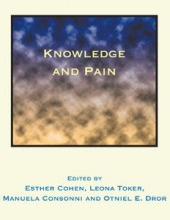
Knowledge and Pain

Knowledge and Pain
2007-2010

Editors: Esther Cohen, Leona Toker, Manuela Consonni, and Otniel E. Dror.